Contents
When you tackle roof repairs, effective pest control is essential to avoid future infestations. Start by evaluating any existing pest problems and sealing potential entry points. Using natural repellents can help, but don’t underestimate the importance of a clean work environment. By monitoring new pest activity and consulting professionals, you can ensure a thorough approach. Stay tuned for practical tips that will keep your roof repair project pest-free and secure.
Key Takeaways
- Inspect the roof and surrounding areas for signs of pests before repairs, documenting findings to prioritize treatment and repairs.
- Seal all entry points, such as gaps around vents and eaves, using effective sealants to prevent pest access during repairs.
- Utilize natural repellents like essential oils and diatomaceous earth around the work area to deter pests without harmful chemicals.
- Set traps strategically in high-traffic areas to monitor and address pest activity during and after the roof repair process.
- Consult with pest control professionals to assess vulnerabilities and implement preventative measures effectively throughout the repair project.
Assessing the Pest Problem Before Repairs
Before you begin any roof repairs, it’s essential to assess the pest problem that may be lurking in your home.
Start with pest identification techniques to determine which pests are present. Look for signs like droppings, damage, or nests in and around your home. Understanding the type of pests can guide your next steps effectively.
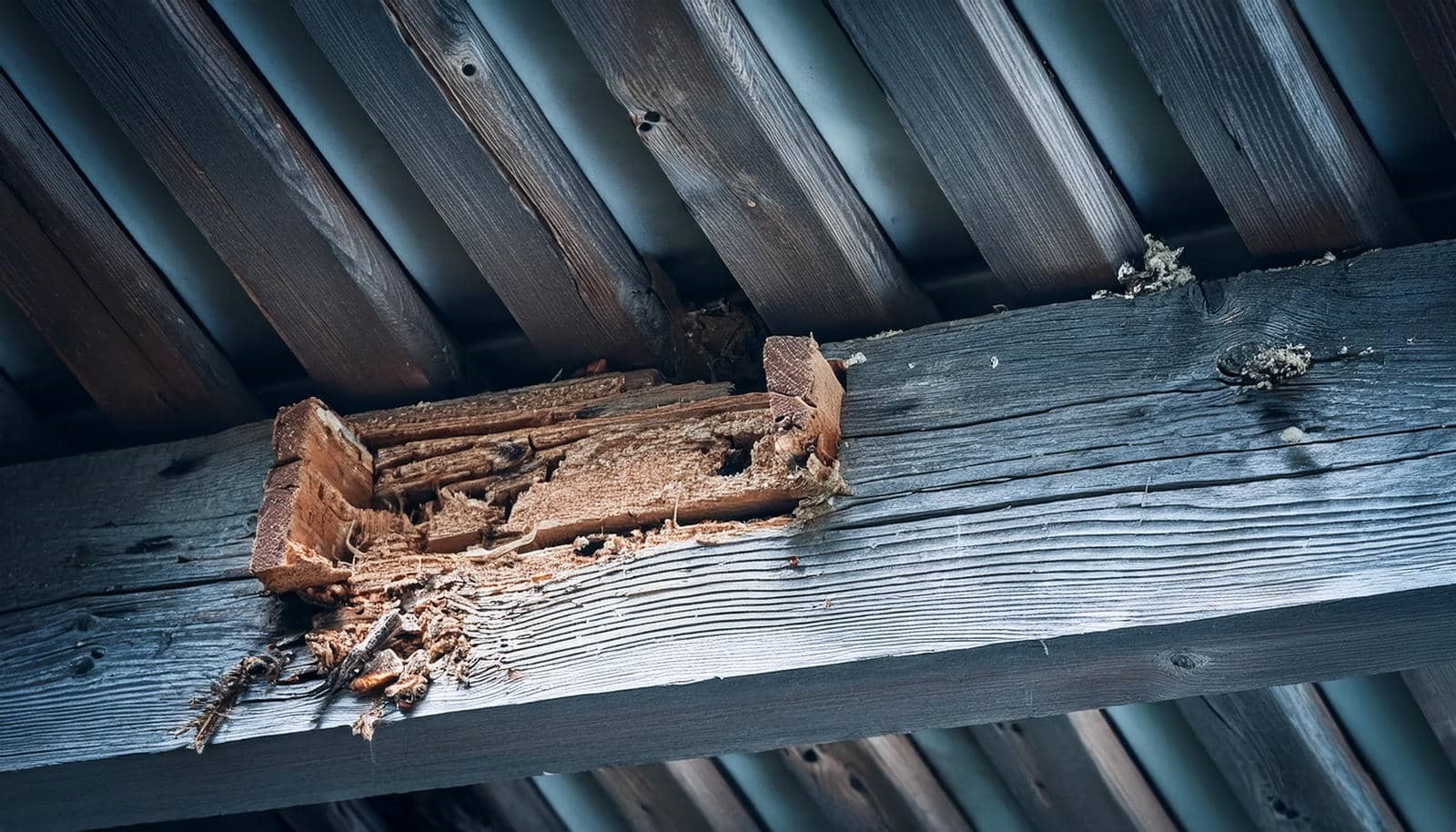
Once you’ve identified the pests, employ damage assessment strategies to evaluate the extent of the problem.
Check your roof, walls, and attic for any structural damage caused by pests. It’s vital to document any findings, as this will aid in prioritizing repairs and treatment.
If the damage is significant, consider consulting a pest control professional who can provide tailored solutions.
Sealing Entry Points to Prevent Infestation
To prevent pest infestation during roof repairs, you need to identify common entry points around your home.
Check areas like gaps around vents, chimneys, and eaves.
Once you’ve pinpointed these vulnerabilities, use effective sealants to close them off and protect your space.
Identify Common Entry Points
As you undertake roof repairs, identifying common entry points for pests becomes essential to prevent future infestations.
Start by examining areas where the roof meets the walls, as gaps can easily form there. Check eaves, vents, and chimneys; these spots often serve as gateways for rodents and insects.
Pay attention to loose shingles or tiles, which might create openings. Additionally, inspect plumbing and electrical entries, as these can also harbor hidden gaps.
Effective pest identification involves looking for droppings or nesting materials nearby, indicating potential entry points.
Use Effective Sealants
While identifying entry points is essential, using effective sealants to close those gaps is equally important for preventing pest infestations.
Start by selecting the right sealant types, like silicone or polyurethane, as they offer durability and flexibility. For smaller cracks, a caulk application works well, while larger gaps may require foam sealants.
When applying, verify surfaces are clean and dry for maximum adhesion. Use a caulking gun for precise application, smoothing the sealant with a tool or your finger for a neat finish.
Don’t forget to check for any missed spots after drying, as thoroughness is key. By sealing these entry points correctly, you create a barrier that keeps pests outside, helping you maintain a safe and comfortable home.
Using Natural Repellents During Repairs
When tackling roof repairs, using natural repellents can be an effective way to deter pests without introducing harmful chemicals into your environment.
Essential oils are a popular choice for natural deterrents. Oils like peppermint, lavender, and eucalyptus can repel insects and create a pleasant scent while you work.
To use these oils, mix a few drops with water in a spray bottle and apply them around the repair area. This method keeps pests at bay and ensure a safer work environment for you and your family.
Additionally, consider using diatomaceous earth as a natural barrier. It’s a non-toxic powder that can deter crawling insects when sprinkled around the base of your home.
Setting Up Traps Around the Work Area
To effectively manage pests during roof repairs, you’ll need a clear trap placement strategy.
Focus on high-traffic areas and potential entry points to maximize your success.
Additionally, selecting the right bait can greatly increase the chances of attracting and capturing unwanted pests.
Trap Placement Strategy
Setting up traps around the work area is essential for effective pest control during roof repairs, as it minimizes the risk of infestations while work is underway.
To create an effective trap placement strategy, consider the following:
Choose appropriate trap types: Select traps that target specific pests in your area, such as rodent or insect traps.
Identify trap locations: Place traps near entry points, such as doors and windows, and along potential pest pathways.
Monitor traps regularly: Check traps daily to ensure they’re functioning and to quickly address any pest issues.
Adjust trap placements: If you notice increased activity in certain areas, reposition traps as needed for better effectiveness.
Bait Selection Tips
Selecting the right bait is essential for the effectiveness of your traps during roof repairs. First, identify the pest types you’re dealing with, as different insects and rodents respond to specific bait types. For example, use peanut butter or seeds for rodents, while sugary substances may attract ants.
Next, focus on bait placement. Position your traps near entry points, nesting sites, or areas where you’ve noticed pest activity. Confirm the bait is secure and accessible, but out of reach of pets or children.
Regularly check your traps and replace bait as needed to maintain their effectiveness. By choosing the right bait and placing it strategically, you’ll enhance your pest control efforts and create a safer environment during your roof repairs.
Communicating With Your Repair Team
How can you ensure effective communication with your repair team during roof repairs? Clear and open dialogue is essential for aligning on repair expectations and ensuring everyone’s on the same page.
Here are some tips for improving team communication:
Establish a primary contact: Designate one person to relay messages for consistency.
Set clear expectations: Discuss project timelines, materials, and any potential pest concerns upfront.
Schedule regular updates: Check in daily or weekly to address any changes or issues promptly.
Encourage feedback: Create a space where team members feel comfortable sharing observations or concerns.
Scheduling Repairs During Off-Peak Pest Seasons
Effective communication with your repair team helps streamline the entire roofing process, but timing your repairs also plays a crucial role in minimizing pest-related issues.
By scheduling repairs during off-peak pest seasons, you can greatly reduce the likelihood of infestations disrupting your work. This requires pest seasonality awareness; know when pests are most active in your area and aim to plan your repairs around those times.
Having repair scheduling flexibility can be beneficial. If you’re able to adjust your timeline, consider postponing work until after the peak pest season, ensuring a smoother repair process.
Additionally, consult your repair team about any specific timelines that align with lower pest activity. By being proactive and aware, you create a safer environment for both your home and your repair team, fostering a sense of community and shared responsibility in maintaining your space.
Keeping the Surrounding Areas Clean and Tidy
Keeping the area around your roof repair site clean is essential to prevent pest infestations.
Regularly remove debris and store tools safely to minimize attractants for pests.
Additionally, using protective barriers can help shield your home from unwanted critters during the repair process.
Remove Debris Regularly
As you begin roof repairs, regularly removing debris is essential for maintaining a clean and safe work environment.
Keeping the area tidy helps you work efficiently and minimizes the risk of pest infestations. Implementing a routine for debris removal and conducting regular inspections ensures that you’re always aware of your surroundings.
- Clear away leaves and twigs daily.
- Dispose of any old roofing materials immediately.
- Check for standing water, which attracts pests.
- Organize tools and materials to avoid clutter.
Store Tools Safely
Properly storing tools is essential for maintaining a clean and safe work environment during roof repairs. Effective tool organization prevents accidents and keeps pests at bay. By ensuring your equipment storage is orderly, you not only enhance safety but also foster a sense of community among your team. Here’s a quick reference table to help you visualize effective storage practices:
| Tool Type | Storage Method |
|---|---|
| Hand Tools | Toolboxes or Pegboards |
| Power Tools | Storage Cabinets |
| Safety Gear | Dedicated Bins |
Use Protective Barriers
Using protective barriers can greatly enhance the cleanliness and safety of your worksite during roof repairs.
These barriers serve as effective preventative measures against pests, debris, and other potential hazards. Proper barrier installation keeps your immediate area tidy and protects your surroundings from unwanted infestations.
Here are some tips for using protective barriers:
- Install tarps to catch debris and prevent pest access.
- Set up fences around the site to deter wildlife and pests.
- Use netting to cover air vents and openings.
- Regularly clean the area to remove any attractants.
Monitoring for New Pest Activity Post-Repairs
Once you’ve completed roof repairs, it’s essential to monitor for any new pest activity that may arise. Start with scheduled post-repair inspections, focusing on areas that were previously compromised. Look for signs of infestations, such as droppings, nests, or damage.
Keeping a detailed log during these inspections can help with pest activity tracking, allowing you to identify patterns or recurring issues. Regularly check the integrity of your repairs, as any new openings could invite pests back into your home.
Make it a habit to inspect both the exterior and interior of your home, especially near roofline intersections. Encourage your family to report any unusual sightings or noises, fostering a community approach to pest control.
Implementing Ongoing Pest Control Measures
While roof repairs can greatly reduce the risk of pest intrusion, implementing ongoing pest control measures is essential for long-term prevention.
To keep your home pest-free, consider these proactive strategies:
Schedule ongoing inspections to identify potential vulnerabilities before they become problems.
Utilize preventative treatments around your property, such as sealing cracks and removing standing water.
Maintain a clean environment by regularly cleaning gutters and removing debris that could attract pests.
Stay informed about local pest activity to adapt your preventative measures accordingly.
Consulting With Pest Control Professionals
When you’re facing roof repairs, consulting with pest control professionals can greatly enhance your efforts to prevent infestations. These experts are equipped with knowledge of effective pest control strategies tailored to your specific situation.
During professional consultations, they’ll assess potential vulnerabilities in your roof and surrounding areas, providing targeted recommendations.
It’s vital to understand that pest issues can arise from even minor repairs. By engaging with pest control specialists early, you can identify risks and implement preventative measures before they escalate.
They’ll help you choose the right treatments and provide ongoing support to ensure your home remains pest-free.
Additionally, a thorough inspection by these professionals can uncover hidden infestations, allowing you to address them proactively.
Frequently Asked Questions
What Types of Pests Are Common During Roof Repairs?
During roof repairs, you might encounter pests like ants, wasps, or rodents, attracted by roofing materials. Implementing pest prevention strategies, such as sealing gaps, can help keep these nuisances at bay while you work.
How Can I Identify Hidden Pest Infestations Before Repairs?
To identify hidden pest infestations before repairs, look for infestation signs like droppings, nests, or damaged materials. Use pest-detection tools or hire professionals to ensure a thorough inspection and effective treatment before any work.
Are There Specific Times of Year for Pest Activity Peaks?
Yes, there are specific times when pest activity peaks, often aligning with seasonal patterns. Understanding pest life cycles helps you anticipate infestations, as many pests thrive during warmer months and seek shelter as temperatures drop.
Can Roof Repairs Attract More Pests to My Home?
Homeowners experience increased pest activity during home repairs. When you focus on roof maintenance, effective pest prevention can minimize this risk, ensuring your home remains a safe, welcoming space for you and your family.
How Do I Safely Dispose of Dead Pests Found During Repairs?
To safely dispose of dead pests, wear gloves and a mask for health precautions. Seal them in a plastic bag, then dispose of them in the trash. Always follow local regulations for proper disposal.
Summary
As you wrap up your roof repairs, think of pest control as your sturdy shield against potential invaders. By sealing entry points and maintaining a clean workspace, you’re not just fixing a roof; you’re fortifying your home. Keep the pest patrol ongoing, like a vigilant sentry, ready to catch any unwelcome guests. With these strategies in place, your home will stand strong, free from the shadows of infestations, allowing you to rest easy under a secure, pest-proof roof.