Contents
Did you know that nearly 14% of homeowners face significant roof leaks at some point? When you discover water damage, acting quickly can save you from costly repairs and structural issues. Understanding the signs and immediate steps can make a difference. Plus, knowing how to choose the right repair service is essential. Let’s explore the urgent solutions available for your roof repair needs.
Key Takeaways
- Assess the damage immediately and document findings with photos for insurance claims and repairs.
- Perform leak detection to identify the source and contain water with buckets.
- Use emergency tarping to temporarily cover damaged areas until professionals arrive.
- Contact a licensed and insured roofing expert for prompt and reliable repair services.
- Review your insurance policy to understand coverage for water damage claims and initiate the claims process quickly.
Identifying Signs of Water Damage on Your Roof
How can you tell if your roof is suffering from water damage? Start with a thorough roof inspection to identify potential issues. Look for missing shingles, curling edges, or discoloration, which can indicate moisture infiltration.
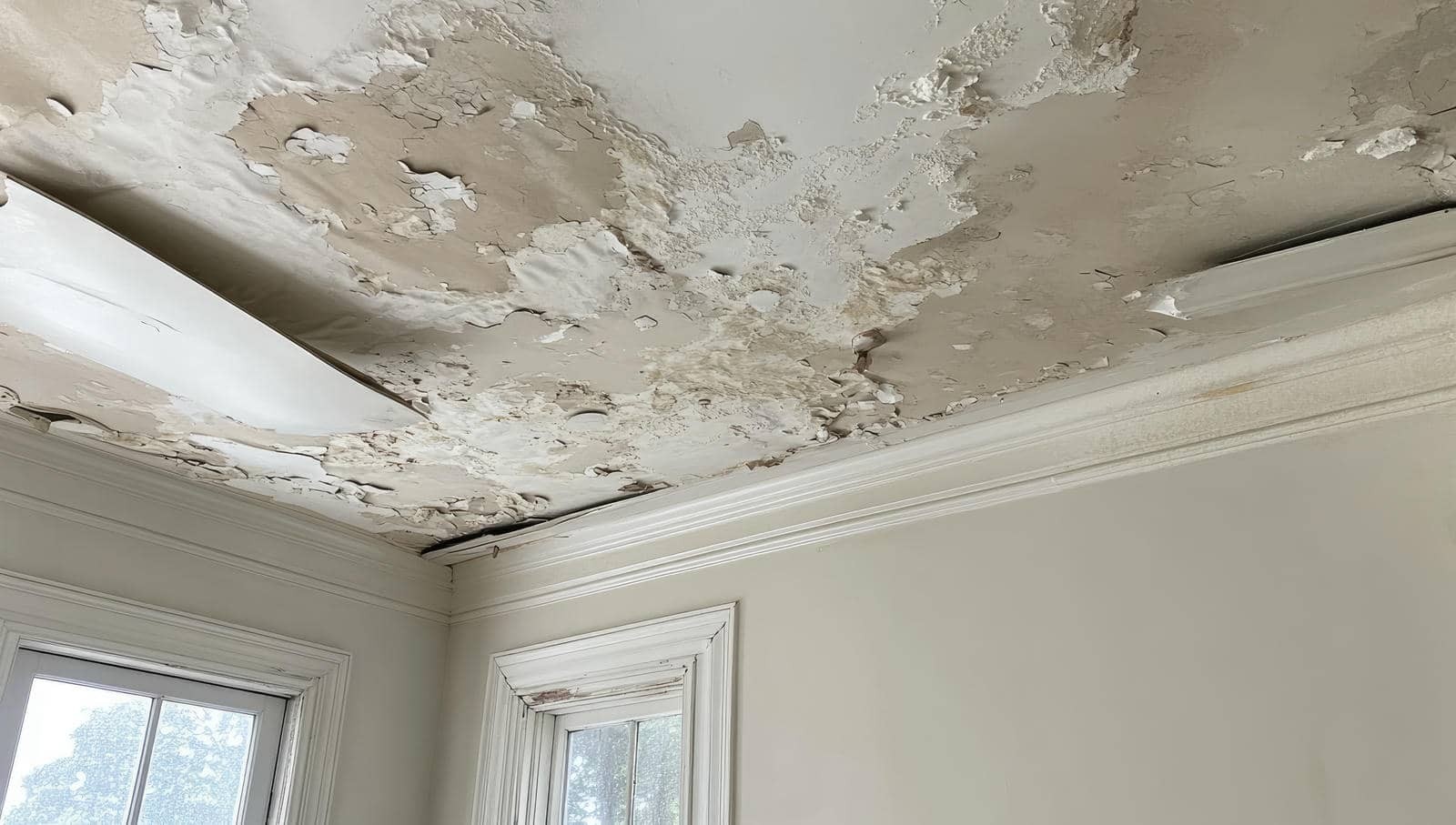
Check the interior of your home, especially ceilings and walls, for water stains or peeling paint. These signs often suggest that water has breached your roof.
Next, conduct a damage assessment by examining the attic for signs of mold or dampness. This hidden area can reveal leaks that aren’t visible from the outside.
Pay attention to any musty odors, which may signal trapped moisture.
Regular roof inspections are crucial to catch these problems early, preventing costly repairs down the line.
Immediate Steps to Take After Roof Water Damage
After experiencing roof water damage, your first step is to assess the extent of the damage to identify any compromised areas.
Next, you’ll need to stop the leak to prevent further issues, which may involve temporarily covering the affected area.
Acting quickly can minimize damage and simplify the repair process.
Assess the Damage
When you discover water damage on your roof, what should your immediate response be? Start with a thorough damage evaluation to determine the extent of the issue and assess the structural integrity of your roof. Here are key steps to guide you:
| Step | Action |
|---|---|
| Inspect the Area | Check for visible signs of damage. |
| Document Findings | Take pictures for insurance and repair records. |
| Evaluate Severity | Note if the damage is minor or extensive. |
| Prioritize Safety | Verify the area is safe before proceeding. |
| Seek Professional Help | If necessary, contact a roofing expert. |
Acting quickly can prevent further complications, so prioritize these steps to protect your home and maintain its value.
Stop the Leak
To effectively stop the leak from worsening, you need to act swiftly and decisively.
Begin with leak detection to identify the source. Inspect your roof for visible damage, such as missing shingles or cracks. If you find the leak, contain the water by moving furniture and placing buckets to catch drips.
Next, use emergency tarping to cover the damaged area temporarily. Secure the tarp with weights or ropes to prevent it from blowing away in the wind.
If the damage is extensive or you’re unsure, don’t hesitate to call a professional for help. Taking immediate action not only protects your home but also fosters a sense of community as you connect with others facing similar challenges.
How to Choose the Right Emergency Roof Repair Service
How can you guarantee you’re choosing the right emergency roof repair service? Start by evaluating their service reputation. Look for companies with positive reviews and testimonials from past clients. This will help you gauge their reliability and quality of work.
Next, assess their emergency response time. A prompt response is essential in minimizing water damage and preventing further issues. Check if they offer 24/7 service, as emergencies don’t adhere to a schedule.
Verify their credentials—ensure they’re licensed, insured, and experienced in handling various roofing materials. Additionally, ask about warranties for their work; a reputable service stands behind their repairs.
Don’t hesitate to seek recommendations from friends or family. Engaging with a trustworthy provider fosters a sense of community and belonging.
Common Causes of Roof Leaks and Water Damage
Roof leaks and water damage often arise from a combination of factors that can compromise your home’s integrity. Identifying leak sources is essential for effective repairs. Common culprits include:
| Leak Source | Weather Impact |
|---|---|
| Damaged shingles | Heavy rain can exacerbate leaks. |
| Clogged gutters | Ice dams can lead to water backup. |
| Flashing failures | Strong winds may dislodge flashing. |
Each of these issues can allow water to infiltrate your roof, leading to significant damage. Additionally, prolonged exposure to moisture can foster mold growth, further jeopardizing your home’s safety. To protect your investment, stay vigilant about roof maintenance and be aware of how weather impacts your property. By addressing these common causes promptly, you can prevent costly repairs down the line and guarantee a safe environment for you and your loved ones.
The Importance of Timely Roof Inspections
Regular roof inspections play an essential role in maintaining your home’s integrity and preventing costly repairs. By scheduling these inspections, you’re not only protecting your investment but also ensuring the safety and comfort of your family.
The roof inspection benefits are significant; they allow you to catch potential issues early, such as leaks or structural damage, before they escalate into major problems.
Incorporating seasonal maintenance into your routine can enhance the longevity of your roof. Each season brings unique challenges, from heavy snow in winter to intense heat in summer. Timely inspections help you address these challenges, ensuring your roof withstands the elements effectively.
Additionally, a well-maintained roof can improve energy efficiency, saving you money on utility bills. By prioritizing roof inspections, you’re fostering a secure environment for your loved ones and contributing to the overall value of your home.
Don’t wait—make inspections a regular part of your home care strategy.
Temporary Fixes vs. Permanent Solutions for Roof Damage
When you encounter roof damage, evaluating its severity is essential for determining the best course of action.
You might consider short-term repair methods to address immediate leaks or issues, but analyzing long-term repair strategies will provide a more durable solution.
Understanding these options allows you to make informed decisions that can protect your home effectively.
Assessing Damage Severity
How can you determine whether your roof damage requires a temporary fix or a permanent solution? Start with a thorough damage assessment. Evaluate the severity of the damage to identify the best course of action. A minor leak might need a quick patch, while extensive damage demands a complete overhaul. Use this table to help guide your decision:
| Assessment Type | Recommended Action |
|---|---|
| Minor Damage | Temporary Fix |
| Moderate Damage | Temporary Fix, Plan Permanent |
| Severe Damage | Permanent Solution |
Understanding these distinctions helps you feel connected to the process and guarantees you’re making informed choices for your home. Prioritize safety and avoid further complications by addressing roof issues promptly.
Short-term Repair Methods
Steering through the options for roof repair can feel overwhelming, but understanding short-term repair methods is essential.
These temporary fixes can help you manage water damage until permanent solutions are implemented. Here are three effective methods you can use:
Emergency tarp: Quickly cover leaks with a durable tarp to prevent further water intrusion.
Sealant application: Use a high-quality sealant on cracks or damaged areas to create a waterproof barrier.
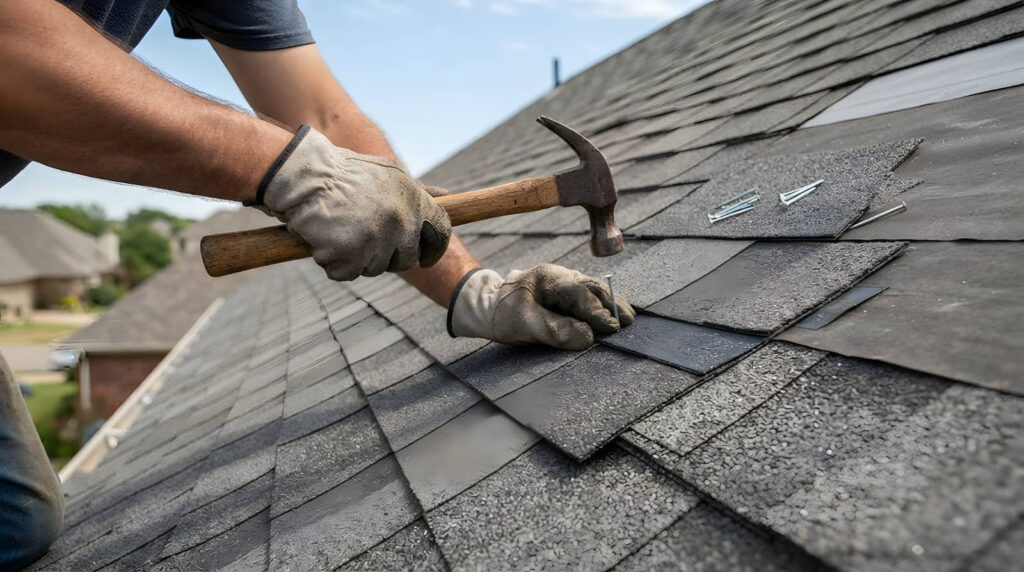
Roof patching: Apply patches to small holes or missing shingles to minimize exposure.
Long-term Repair Strategies
While temporary fixes can provide immediate relief from roof damage, it’s crucial to contemplate long-term repair strategies for a durable solution.
By focusing on strategic planning, you can address underlying issues that may lead to recurring problems. Investing in quality materials and skilled labor guarantees your roof withstands future weather challenges, delivering long-term benefits.
Consider a complete roof replacement or extensive repairs tailored to your specific needs. Regular maintenance, such as inspections and timely repairs, can further extend your roof’s lifespan.
Prioritizing these long-term strategies not only protects your home but also fosters a sense of community, as you contribute to neighborhood stability and property values.
Make informed decisions today for a secure tomorrow.
Insurance Considerations for Roof Water Damage Claims
Understanding the intricacies of insurance claims for roof water damage is essential, especially if you want to guarantee proper coverage and compensation.
To navigate this process effectively, keep these key considerations in mind:
Review your insurance policy: Familiarize yourself with the specific coverage for water damage and any exclusions that may apply.
Gather claim documentation: Document the damage thoroughly with photos and detailed descriptions to support your claim.
Communicate promptly: Notify your insurance provider as soon as you discover the damage to initiate the claims process quickly.
Preventative Measures to Avoid Future Water Damage
After maneuvering through the complexities of insurance claims for roof water damage, it’s essential to take proactive steps to prevent future issues.
Regular roof maintenance is vital. Schedule inspections at least twice a year, focusing on identifying potential weaknesses. Look for cracked shingles, loose flashing, or clogged gutters, which can all lead to water infiltration.
Implement weatherproofing techniques, such as applying sealants and replacing worn-out materials. These measures create a robust barrier against the elements.
Additionally, guarantee proper ventilation in your attic to reduce moisture buildup, which can compromise your roof’s integrity over time.
Consider investing in high-quality roofing materials designed to withstand harsh weather.
By taking these preventative measures, you not only protect your home but also foster a sense of community among homeowners who value resilience and proactive care.
Finding Trusted Restoration Companies Near You
How do you find reliable restoration companies in your area? Start by researching local contractors with a solid reputation. Here are some steps to help you choose wisely:
Check customer reviews: Look for feedback on platforms like Google, Yelp, or Angie’s List to gauge past experiences.
Verify credentials: Confirm the contractors have proper licenses and insurance to protect you from liability.
Ask for estimates: Get multiple quotes to compare pricing and services offered.
Frequently Asked Questions
How Can I Tell if My Roof Needs Immediate Repair?
You’ll know your roof needs immediate repair by checking for roof inspection signs like missing shingles, sagging areas, or water damage indicators such as stains on ceilings. Don’t overlook these signs; they could lead to costly problems.
What Materials Are Best for Temporary Roof Repairs?
For temporary roof repairs, consider using tarps, roofing cement, or patches made from metal or plastic. These waterproofing options provide a quick fix, helping you protect your home until permanent repairs can be made.
How Long Does Emergency Roof Repair Usually Take?
Emergency roof repair usually takes a few hours to a day, depending on the damage’s severity and the emergency response team’s efficiency. Quick assessments and skilled labor can greatly shorten the repair duration for your peace of mind.
Can I Perform My Own Roof Repairs Safely?
Think of your roof as a delicate puzzle. You can perform your own repairs safely if you follow safety precautions and use the right DIY tools, but always assess your skills before tackling complex issues.
What Should I Do if My Roof Repair Is Denied by Insurance?
If your roof repair’s denied by insurance, gather detailed repair documentation and consider filing an insurance appeal. Clearly present your case, highlighting any overlooked damages, to increase the chances of a successful reconsideration.
Recap
In the face of water damage, don’t let your home’s roof become a leaky sieve. By taking swift action and seeking professional help, you can preserve your sanctuary from further turmoil. Embrace the temporary solutions while planning for lasting repairs, ensuring your roof stands resilient against future storms. With the right restoration team by your side, you can transform your home back into a fortress, safeguarding it from the unseen threats lurking above.