Contents
Imagine your roof as a shield, once strong, now scarred by flames. You need to assess the extent of the fire damage first, as hidden issues can compromise safety. Next, choosing the right repair materials is vital for resilience. Finally, implementing both temporary and permanent solutions guarantees your home regains its strength. But how do you navigate these steps effectively to protect your investment? Let’s explore the essential techniques that can make all the difference.
Key Takeaways
- Conduct a thorough damage evaluation to identify both visible and hidden issues before initiating repairs.
- Replace damaged roofing materials with fire-resistant options like metal panels or fire-rated shingles.
- Implement temporary solutions like tarps or plywood to protect the roof from further weather damage.
- Ensure that all repairs comply with local building codes and regulations for safety.
- Schedule regular inspections after repairs to maintain roof integrity and prevent future issues.
Assessing the Extent of Fire Damage
How can you accurately assess the extent of fire damage to your roof? Start with a thorough damage evaluation, focusing on both visible and hidden issues.
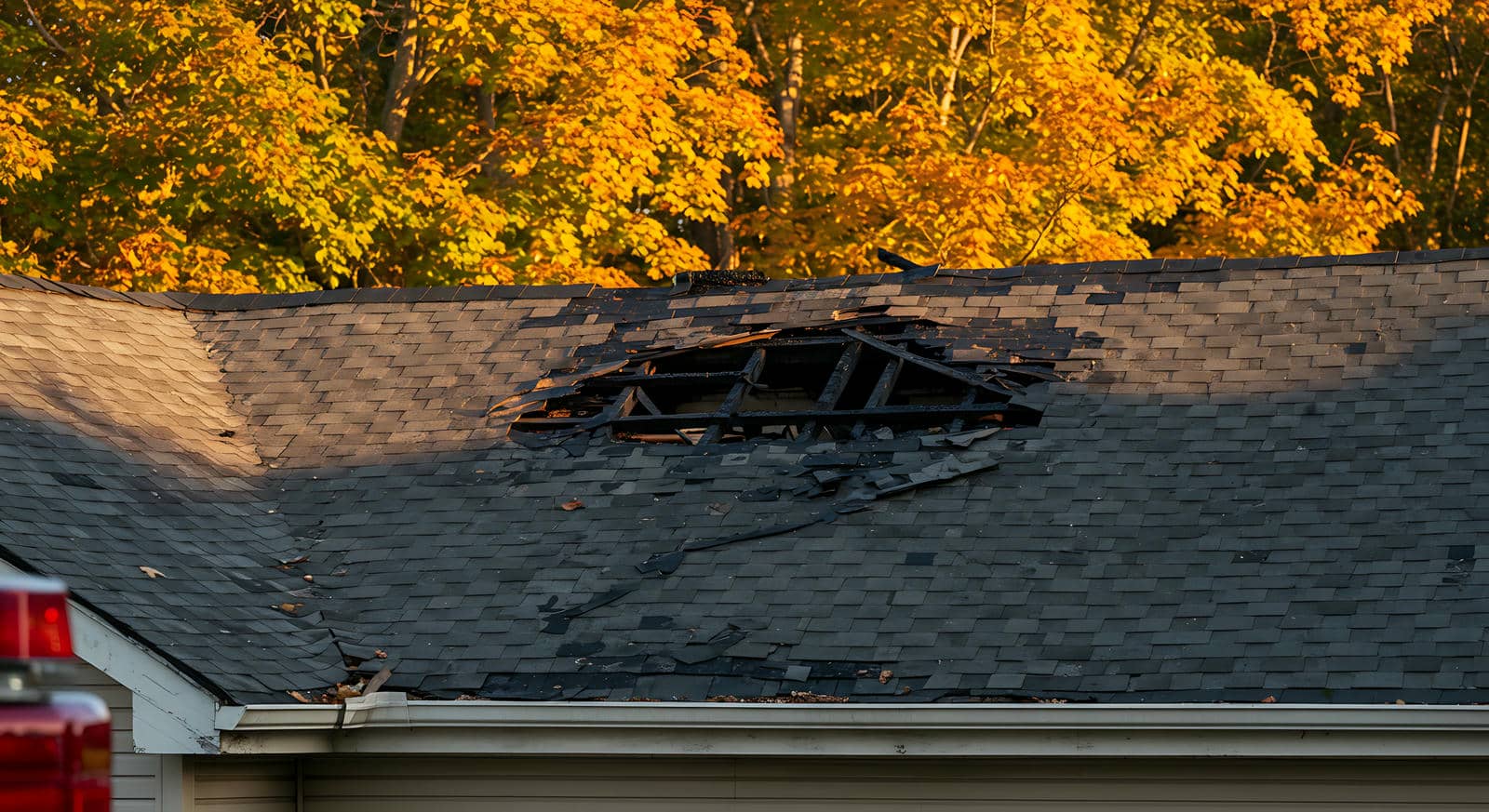
Inspect the roofing materials for charring, discoloration, and warping. These signs indicate compromised structural integrity.
During your fire inspection, don’t forget to check underlying components, like decking and insulation, as they may harbor unseen damage. Use a flashlight to look for smoke stains or soot, which can signal deeper issues that need addressing.
Consider employing a professional for a detailed assessment, especially if you’re uncertain about what to look for. They can provide specialized knowledge and tools to detect damage that mightn’t be apparent to the untrained eye.
Choosing the Right Repair Materials
Selecting appropriate repair materials for your fire-damaged roof is essential to restoring safety and functionality.
You’ll want to evaluate various repair material types, including asphalt shingles, metal panels, and composite materials, each offering unique benefits for fire resistance and longevity.
Durability considerations play a significant role in your selection process. Materials such as metal and specialized fire-rated shingles can withstand extreme temperatures better than standard options, ensuring your roof remains intact during future incidents.
Additionally, consider the climate of your area; certain materials perform better in specific weather conditions.
For instance, if you live in a region prone to heavy rainfall, opt for materials that offer superior water resistance.
Implementing Temporary and Permanent Solutions
Once you’ve chosen the right repair materials for your fire-damaged roof, it’s important to implement both temporary and permanent solutions to guarantee safety and functionality.
Start with temporary fixes, like tarps or plywood, to protect your home from further weather damage. These quick measures can provide immediate relief while you assess the extent of the damage and plan for more thorough repairs.
For long-term strategies, consider replacing damaged shingles or sections of the roof with fire-resistant materials. This not only restores your roof’s integrity but also enhances its fire resilience for the future.
It’s crucial to work with professionals who can verify that permanent repairs meet local building codes and standards. By combining these temporary fixes with durable, long-lasting solutions, you create a safer environment for your family and secure your investment in your home.
Frequently Asked Questions
How Can I Prevent Fire Damage to My Roof in the Future?
To prevent fire damage to your roof, use fire resistant materials during construction or renovation. Regular inspections help identify vulnerabilities, ensuring your roof remains secure against potential threats. Stay proactive and protect your investment effectively.
What Insurance Coverage Is Necessary for Fire Damage Roof Repairs?
When it comes to fire damage, you’ve got to cover your bases. Make certain your fire insurance has adequate coverage limits to fully protect your roof repair costs, so you’re not left high and dry after an incident.
Are There Any Local Regulations for Fire Damage Repairs?
You need to check local building codes and obtain repair permits for fire damage repairs. Compliance guarantees safety and legality, protecting your investment while fostering community standards. Don’t skip this vital step in your restoration process.
How Long Does It Typically Take to Repair a Fire-Damaged Roof?
Repair duration for a fire-damaged roof usually ranges from a few days to several weeks, depending on damage severity and restoration process complexity. You’ll find that timely assessments can greatly expedite your project and guarantee quality outcomes.
Can I Perform Roof Repairs Myself After Fire Damage?
You can attempt roof repairs yourself, but be aware of DIY risks. Fire damage often compromises structural integrity, and improper repairs can lead to further issues. It’s essential to assess your skills before proceeding.
Summary
Addressing fire damage to your roof requires a meticulous approach, from evaluating the extent of the damage to selecting the right materials for repair. By implementing both temporary and permanent solutions, you can restore not just your roof but also the safety and integrity of your entire home. Don’t underestimate the importance of professional involvement; it’s like having a shield against the flames of uncertainty, ensuring your peace of mind and protection for years to come.