Contents
A minor roof defect can become a pest highway, and a small infestation can turn into roof damage fast. You need roof repair and pest removal when missing shingles, cracked flashing, or wet decking let insects or rodents in through exposed gaps. By fixing the structure and eliminating nests, droppings, and entry points, you stop the cycle before leaks, contamination, and further deterioration spread. The key is knowing which problem started it.
Key Takeaways
- Roof repair and pest removal is a combined service that fixes roof damage and eliminates pests entering through gaps.
- It addresses missing shingles, cracked flashing, leaks, and other defects that let rodents, insects, and wildlife inside.
- Professionals remove nests, droppings, and infestations before sealing vulnerable roof areas.
- Coordinated repairs restore shingles, flashing, vents, soffits, and fascia to block future pest access.
- Regular inspections and maintenance help prevent roof damage, moisture buildup, and repeat infestations.
What Roof Damage Lets Pests In?
Even small roof defects can open a path for pests. You expose your home when shingles crack, lift, or go missing, because these roof vulnerabilities create entry points. Roof repair and pest removal often go hand in hand after storm damage.
Damaged flashing around chimneys, vents, and skylights lets insects and rodents slip into attic spaces. Soft, rotted decking and sagging edges also give pests cover and access.
Gaps at the ridge, eaves, and fascia can support pest migration from outside to inside, especially after storms or freeze-thaw cycles. Torn underlayment and loose seals around pipe boots worsen the problem.
You protect your space by sealing openings fast, replacing compromised materials, and keeping the roof surface tight. That limits nesting, chewing, and contamination, and helps your household stay secure and comfortable.
Signs You Need Roof Repair Now
You need roof repair now when you see missing or curling shingles, cracked flashing, sagging sections, or water stains on ceilings and attic framing. Combining roof repair and pest removal stops pests from returning through the same gaps.
These signs mean your roof’s protective layers are failing, and you shouldn’t wait. Schedule a roof inspection soon so a technician can check underlayment, fasteners, valleys, and penetrations before small defects spread.
If you notice active leaks, daylight in the attic, or worsening stains after rain, call for emergency repairs right away. Acting fast helps you protect your home, reduce repair costs, and stay with neighbors who take maintenance seriously.
You’ll also keep your roof stronger for storms and daily wear. Trust your eye, document changes, and get professional help before the damage grows.
How Roof Repair Stops Pest Entry
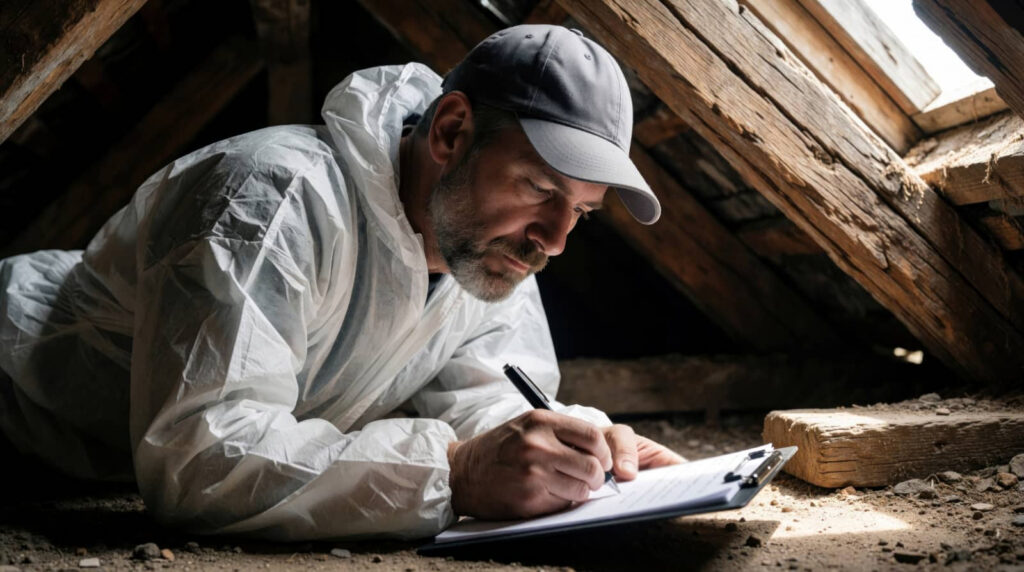
You can stop pests from entering by sealing roof gaps around flashing, vents, and edges. Professional roof repair and pest removal begins with a full attic and roof inspection.
When you fix damaged shingles, you remove openings that rodents and insects use to get inside. These repairs block pest access and strengthen your roof’s barrier.
Seal Roof Gaps
Sealing roof gaps is one of the most effective ways to block pest entry, because even small openings let rodents, birds, bats, and insects access the attic and wall cavities.
You should begin with a careful gap inspection around vents, flashing, eaves, fascia, and utility penetrations. Match sealant types to the opening: use polyurethane or silicone for narrow joints, and mesh-backed sealants for larger voids that need support.
Clean each area first so the material bonds well, then apply it evenly to create a tight, weather-resistant barrier. You’ll protect your home’s interior and help your household stay comfortable, clean, and secure.
Recheck sealed areas after storms and seasonal temperature shifts, since movement can reopen tiny entry points and invite pests back in.
Fix Damaged Shingles
Damaged shingles create exposed edges, lifted tabs, and hidden gaps that pests can use to enter the roof deck and attic. You should inspect these areas after storms, heat, or aging because weakened shingles lose their seal and protective overlap.
When you spot cracking, curling, or missing sections, use shingle replacement to restore a tight surface and keep the roof line intact. Effective repair techniques include matching shingle type, securing fasteners correctly, and replacing underlayment when needed.
You’ll help your home stay in the group of well-protected properties that resist intrusion and moisture damage. Prompt repairs also reduce places where insects and rodents can nest, chew, or hide.
Block Pest Access
When roof gaps stay open, pests use them as direct entry points into the attic, soffits, and wall cavities. You block access by sealing cracks, replacing warped flashing, and repairing broken fascia before rodents or insects settle in.
Good roof repair restores tight edges around vents, chimneys, and drip lines, so pest barriers stay continuous. You also keep roof ventilation working by fitting screened vent covers that let air move while stopping nesting animals.
Inspect damaged seals after storms, since even small openings invite entry. When you close these weak spots, you protect insulation, wiring, and stored items, and you help your home feel secure and cared for.
That’s how your roof works with you to keep pests out.
Common Pests in Damaged Roofs
A damaged roof can invite a range of pests, including rodents, raccoons, squirrels, bats, termites, and wasps, because gaps, loose shingles, and wet wood create easy entry points and nesting sites. Delaying roof repair and pest removal can lead to costly structural damage.
You should use pest identification to separate roof insects from mammals during your damage assessment. Rodents chew insulation and wiring, while bats cluster in quiet voids. Raccoons lift shingles and widen openings, and squirrels run along rafters to nest.
Termites target damp framing, and wasps build paper nests near eaves. Watch pest behavior for signs like droppings, scratch marks, buzzing, or stains.
Seasonal pests often increase after storms or heat waves, so your prevention strategies should include regular inspections, trimming branches, and sealing small openings before problems spread.
How Roof Repair and Pest Removal Work Together
Roof repair and pest removal should happen in coordination, because fixing the structure without removing pests can trap infestations inside and let them return through the same entry points. Roof repair and pest removal also helps protect your insulation and wiring.
You’ll get better results when you inspect, treat, and seal in one plan. A pest professional can clear nests, droppings, and hidden colonies, while your roofer replaces damaged shingles, flashing, and vent covers.
Together, you reduce access points and restore the barrier your home needs. Use pest prevention strategies such as sealing gaps, trimming branches, and storing debris away from the roofline.
Follow roof maintenance tips like checking after storms, cleaning gutters, and replacing worn sealant.
When you coordinate both services, you protect your home, support your crew, and keep your space working for you.
Why Roof Leaks Attract More Pests
Roof leaks create moisture that attracts insects and other pests looking for water and shelter. Many contractors coordinate roof repair and pest removal to save you time.
You also give pests hidden entry points through damaged shingles, gaps, and saturated materials.
Damp roof areas can support nesting, so you need to fix leaks quickly to reduce infestation risk.
Moisture Attracts Insects
Even a small roof leak can create the damp conditions many insects need to survive and reproduce. When water lingers in insulation, wood, or ceiling materials, you give pests a reliable source of humidity and access to softened surfaces.
That’s why moisture control matters: you reduce the conditions that support insect behavior and limit the signals that draw them in. Ants, silverfish, cockroaches, and termites all respond to persistent dampness, especially when warmth follows rain.
You’ll protect your home best when you inspect for staining, condensation, and warped materials, then act quickly. Drying the area, repairing the leak, and keeping humidity low helps you break the cycle.
When you manage moisture well, you make your space less inviting and more secure.
Hidden Entry Points
Where do pests get in? Roof leaks often reveal hidden vulnerabilities around flashing, lifted shingles, vents, and roof edges.
You may not see these gaps from the ground, but insects and rodents use them fast. Water softens sealants, widens cracks, and exposes fastener holes, so pests don’t need a large opening. They only need a path into your roof system.
If you’re part of a neighborhood that values strong homes, you can protect yours with routine checks and entry prevention. Inspect after storms, seal damaged joints, replace warped materials, and clear debris that hides access points.
Quick roof repair limits the openings pests exploit and helps you stay ahead of infestations before they spread through your property.
Nesting In Damp Areas
Once water gets past damaged shingles or flashing, it doesn’t just create a leak—it creates a damp, sheltered zone that attracts pests. You’re giving rodents, cockroaches, and ants the conditions they need to nest, feed, and multiply.
Damp insulation holds heat and odor, so pests can hide there longer and stay active near your living space. Moisture retention also softens wood and drywall, making it easier for them to chew, burrow, and expand entry routes.
If you notice staining, sagging ceilings, or a musty smell, act fast. Repair the roof source, dry the cavity, and replace contaminated materials.
When you fix leaks quickly, you protect your home and keep your household safer, cleaner, and part of a healthier environment.
When to Call a Certified Roof Expert?
If you’re seeing persistent leaks, sagging roof lines, missing shingles, or signs of pest intrusion near vents, it’s time to call a certified roof expert. You’ll get a proper diagnosis before damage spreads through decking, insulation, or framing. Regular checks make roof repair and pest removal easier to manage.
A trained specialist can assess flashing, vents, and underlayment, then separate structural issues from pest entry points. That matters because quick patch jobs often miss hidden failures.
You also gain roof inspection benefits: clearer risk estimates, safer repairs, and fewer surprise costs. When choosing contractors, look for licensing, insurance, and documented experience with both roof repair and pest-related damage.
You’re not overreacting—you’re protecting your home and joining a group of owners who act early, fix problems correctly, and keep their roofs dependable.
How to Prevent Future Roof Pests
To prevent future roof pests, you need to seal entry points, reduce attractants, and keep roof components in good repair. Budgeting for roof repair and pest removal together often lowers your total cost.
Inspect flashing, vents, soffits, and fascia for gaps, then caulk, screen, or replace damaged parts. Trim branches away from the roof so pests can’t bridge gaps.
Store food, birdseed, and pet waste securely, because these draw rodents and insects to your home. Clean gutters and remove debris so nesting material doesn’t collect.
Use pest proofing techniques like steel mesh over openings and weatherstripping at access points.
Follow roof maintenance tips by checking shingles after storms and fixing leaks fast.
When you stay proactive, you protect your home and join the group of owners who keep pests out for good.
Frequently Asked Questions
How Much Does Roof Repair and Pest Removal Usually Cost?
You’ll usually pay $300–$1,500 for roof repair costs and $150–$600 for pest removal expenses, depending on damage, materials, and infestation size. You can avoid surprises by getting an inspection and written estimate.
Are Roof Repairs Covered by Homeowners Insurance?
Yes, your roof repairs may be covered by homeowners insurance if damage comes from a sudden, covered event. Check your insurance policy, then start the claim process quickly. Don’t assume; you’ll feel relieved when facts confirm it.
How Long Does Pest Removal Take After Roof Damage?
You’ll usually need one to three days after roof damage, once pest identification techniques confirm the issue and roof damage signs point to entry. You can speed treatment by sealing gaps, removing nests, and coordinating repairs.
Can I Stay Home During Roof Repair and Pest Treatment?
Yes, you can usually stay home if you follow safety precautions and accept higher noise levels. You’ll need clear access, secure pets, and avoid treated areas. Ask your contractor for timing, ventilation, and entry restrictions.
Which Season Is Best for Roof Repair and Pest Control?
Spring’s usually best for you because spring maintenance lets you catch damage early and align pest control with seasonal considerations. You’ll join a proactive crew, avoid weather delays, and protect your roof before infestations spread.
Wrap-Up
In short, you need to fix roof damage fast and remove pests at the same time. When you repair broken shingles, seal flashing, and close cracks, you stop rodents, birds, and insects from slipping in. Prompt, precise pest control paired with proper roof repair protects your home from leaks, nesting, and costly damage. Stay proactive, inspect regularly, and call a certified expert when problems persist, so your roof stays sound and secure.
Roof repair and pest removal keeps your home sealed, dry, and protected from unwanted pests. For more helpful guidance, read our post on 5 tips for certified roof repair.